Author: <span>Donnie</span>

围绕美中WTO知识产权争端的Propaganda

2009年3月20日,WTO争端解决机构正式通过了DS362专家组报告(美国诉中国影响知识产权保护措施案,两年来,我在这里这里这里这里这里一直对此案进展有记录)。了解WTO的都知道,如果没有上诉,专家组报告是不可能通不过的,因为只有“一致反对”,才会导致不通过。而专家组报告已于1月份公布,所以现在已经不算什么新闻了。简单地说,本案中,专家组的判决是:

(1)认定中国著作权法第四条所规定的“违法作品不受本法保护”及其它相关法规中的审查措施有违TRIPS及伯尔尼公约的作品自动保护原则(关于这一点,我的一篇论文有详细分析);

(2)中国海关根据特定条件,决定将罚没的侵权品捐赠给社会公益机构、卖给权利人或拍卖处理等方式本身并无不妥,中国海关在将罚没商品拍卖前,只是除去侵权品上的商标而没有其它措施(例如征得商标权人的同意),是违反TRIPS规定的。

(3)中国已经对达到一定规模的盗版和假冒行为进行了刑事处罚。至于这个处罚标准是否适当,美方有义务举证,但美国的证据不足以证明这个“规模”不是“商业规模”。“商业规模”是一个相对性的概念,起诉方必须证明:对相关的确定市场和特定产品而言,被诉方的法律措施,确实无法涵盖所有达到“商业规模”的商标假冒和盗版行为(从WTO法发展的意义上讲,这一段专家组意见最为重要,也最为精彩)。

被推迟实施的新西兰版权法修正案

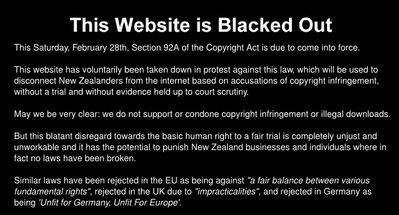
新西兰于2008年10月31日通过《版权(新技术)修正法案》,在《1994年版权法》中增加第92A—92E条。该法案的第92A和92C条遭到一些非政府组织的强烈反对博客的集体“断电”抗议

2009年2月23日,新西兰总理约翰·基(John Phillip Key,wikipedia)突然宣布,将该法案第92A条的实施时间将被推迟到3月27日。


第92A条中文翻译如下:

They just had Not Noticed It – Rebecca's Talk

screen-capture.pngRebecca Mackinnor brought an interesting talk at the Berkman Center on China’s Internet culture. See the video here, and see the notes by Ethan Zuckerman here, and notes by David Weinberger here.

In her presentation, Rebecca figures out the Back-Dorm Boys (后舍男孩), Premier Wen Jiabao’s 2-plus hour net chatting, rivercrab(河蟹), "alpaca sheep(草泥马)", blocked blogs and so on. These are very familar to Chinese netizens, at least those Chinese netizens who are working on the social development of the cyberspace and the cyberlaw. While what the most important observation of Rebecca, in my view, appears at the Q&A session. She said that for many people living on the mainland China, they  just not noticed the censorship.

Why? Becuse they just have many other concerns about their life, and

(1) for Chinese mainlander students, there are so much interesting stuffs IN the Chinese Cyberspace, including "alpaca sheep";

当Google遇上皇家版权——政府文件的著作权问题

  请先看这个新闻:澳大利亚政府限制Google Map显示“野火地图服务”

  自2月8日上线后,GoogleMap所提供的野火监看服务,已有超过100万人次浏览。Google澳洲工程主任AlanNoble表示,得知澳洲消 防局 (CommonwealthFireAuthority,简称CFA)已无力维持其在线野火资料的更新,Google工程师决定伸出援手,在 GoogleMap提供即时地图、位置和野火强度等信息,并取得CFA同意。 但Google欲向维多利亚省永续环境部索取公有土地的火灾资料时,竟遭到拒绝,导致工程人员无法制作这部分的地图。根据Noble的说法,此事应归咎于Crown著作权法条。此规定将所有政府产生资讯的著作权,全数归于政府,防止未经明确许可的使用……


   接下来是我的:

张大妈需要谨慎对待打酱油

  今晚在中国期刊网的RSS上读到某标题,相当有气势,再看摘要,雄浑之气跃然液晶屏之上,赶紧登入数据库。好家伙,从桑斯坦到温特沙伊德,从合同法到反垄断,短短四千多字,寰宇收入囊中,沧海归于一粟。。。而且更牛的是,其中箴言性质的语句磅礴而出,俯仰皆是,至少90%是无可辩驳一定正确的。

  忽然想起Word软件有个词语替换功能,于是替换了些关键词,把文章中的主语和宾语替换成与其所讨论内容距离遥远的主题,发现又是另一篇文章,而且照样有气势,照样很磅礴,照样很正确。例如:


  标题:《张大妈需要谨慎对待打酱油》

Internet Clauses in Chinese Copyright Law

Here is a very brief summary to some of my understandings to the Right of Communication of Information through Networks in Chinese Copyrgiht law. This summary was completed in 2007. My consideration has been improved much afterwards. Just post it for record.

I’ve completed four papers in Chinese on these arguments. Two of them are published and can be found at this site (click here and here), while the other two are still not be published. I also drafted (and keep on updating) an English artilce on this topic, and it will be included in my PhD thesis.

"Internet Clauses" in Chinese Copyright Law

In Copyright Law of People’s Republic of China, a “Right of Communication of Information through Networks" (RCIN hereinafter) was regulated and defined in 2001’s amendment.  In 2006, an ordinance specifically concerning this right was promulgated by central government of China.  Together with some administrative regulations and judicial interpretations,  China has established a system of online copyright protection. My primary arguments and discoveries are as follows:

Firstly, whilst Chinese Copyright Law defines some rights of "communication through networks" for performers and recorders respectively, RCIN is by its definition only a branch of the author’s right but not under the title of neighboring rights. This argument has also been confessed by some Chinese scholars.  I strengthened the reason and clarified the distinction between RCIN and neighboring right (or relating right) owners’ similar rights.

Secondly, although the Article 10, clause 1 (12) of Chinese Copyright Law specifies RCIN with the characters of "the public", "by wire or wireless", "a place and at a time individually chosen" and "communicate work", it still not provides a clear and reasonable conception for the distinction to the other paratactic author’s rights defined in the same article. The reason of this loophole comes from confusing of the abstract legal concepts with the idiographic descriptions, which I have discussed above.

Thirdly, with the illustration of the existence of "intangible medium of copyright work" and clarification of it from "copyright work", I find a reasonable way to interpret RCIN in the context of Chinese Copyright system, which is to confine the right of distribution and the right of exhibition’s objects into the "tangible medium", and to specify the object of RCIN as the "intangible medium".

Fourthly, China’s RCIN is quite distinguished from the Right of Communication to the Public in Article 8 of WCT. RCIN is a specific branch of author’s right, whilst Article 8 of WCT is merely a minimum requirement to the treaty parties. One should not interpret the former by using the interpretations to the latter.

Fifthly, a performer is incapable to enjoy the right of communicate his own performance to the public on information network, but can merely authorize others to communicate his performance to the public on information network. While the sounds recorders and video recorders should enjoy the "right of communication to the public through information network by themselves", but The Law neglected it wrongfully.

Sixthly, it is reasonable to restrict the Radio and Television Stations enjoying the right to communicate to the public on information networks. And the “communicators” shall not own a specific right for their activities of “communicating the information”. In another word, the range of relating right shall not be unreasonably extended.

Seventhly, according to Decision of the Standing Committee of the National People’s Congress on Acceding to the WIPO Performances and Phonograms Treaty, China make a reservation to WPPT Article 15. After reviewing the negotiation process of WPPT, I find this reservation seems not necessary since China has already provided the legal mechanism for protecting the right stipulated in WPPT Article 15.

 

学习低俗标准十三条

同学们,上课了。根据名字很长很长的中心(简称中违不报中心)从名字很长很长的办公室(简称全整办)了解到的情况,这次清理整治网上低俗内容主要包括以下十三项。为了让同学们更生动活泼地学习中心和办的精神,在每条后加上链接,作为具体例子(均出自被表扬网站),请注意一定要用批判地眼光,牢记登在哪里比登了什么重要这个大的原则,全面理解此次行动的重要意义。


1、直接暴露和描写人体性部位的内容;点这里

2、表现或隐晦表现性行为、具有挑逗性或者侮辱性的内容;点这里

3、以带有性暗示、性挑逗的语言描述性行为、性过程、性方式的内容;这里

4、全身或者隐私部位未着衣物,仅用肢体掩盖隐私部位的内容;点这里

5、带有侵犯个人隐私性质的走光、偷拍、漏点等内容;点这里这里这里

6、以庸俗和挑逗性标题吸引点击的内容;点这里这里以及这里

7、相关部门禁止传播的色情和有伤社会风化的文字、音视频内容,包括一些电影的删节片段;点这里这里

8、传播一夜情、换妻、性虐待等的有害信息;点这里

9、情色动漫;点这里

10、宣扬暴力、恶意谩骂、侮辱他人等的内容;点这里(注意最后一段)

11、非法性药品广告和性病治疗广告等相关内容;

12、恶意传播侵害他人隐私的内容;点这里

13、推介淫秽色情网站和网上低俗信息的链接、图片、文字等内容。本贴算不算?


WTO Panel Report – DS362 US v China on IP Measures

On 26 Jan. 2009, a Panel established by the WTO’s Dispute Settlement Body issued its Report on the case China – Measures Affecting the Protection and Enforcement of Intellectual Property Rights (DS362). The United States brought the complaint. The full Report can be found here. An excerpt containing just the Panel’s conclusions and recommendation can be found here. A summary of the case can be found here.


ps一点牢骚: 关于中国著作权法第四条的讨论,我在2008年初已经写就万字文章,可惜因为懒于联系杂志,一直未能正式发表,现在想来有些遗憾。如果有需要,可给我发邮件(如果能帮忙推荐发表就更好了,唉……)。

我们缺乏对既存中国著作权法条文的精细研究。轻率的宏大叙事和价值关怀,以及动辄审问“研究意义”的倾向,再加上以翻译外国法为立论基础,忽视中国自身法条解释的奇怪论证逻辑,再三遮蔽了我们的视线。DS362一役,让WTO专家组帮我们解释中国法律,其中尴尬,可堪为戒。

Telecommunication vs Communication Signal

Telecommunication and Communication Signal in Canadian Copyright Act

This is a bilingual post. Chinese version is following the English one.
加拿大版权法中“电磁通讯”与“广播信号”的区别
这是一篇双语日志,中文版跟在英文版后面。
 

Easy124, a reader of this blog, sent me some provisions in Canadian Copyright Act, and asked me some questions on the performer’s rights in that law.

Actually I am not among professionals specially in Canadian law. Last time I read the Canadian Copyright Act was two months ago when I was revising my paper on orphan Works. So to me, his questions are opportunities for my study rather than enquires for somehow expertise.

There are three questions raised by Easy. I have mentioned one of them in a former post, which is about the unauthorized fixation of a performer’s performance. Here I’d like to discuss another interesting question: difference between "telecommunication" and "communication signal". The last question about the Right to Remuneration will be disscussed  later.

In Section 15 (1) (a) of Canada Copyright  Act, the law noted that, if a performance is not fixed, its performer has the right:

(i) to communicate it to the public by telecommunication,
(ii) to perform it in public, where it is communicated to the public by telecommunication otherwise than by communication signal, and
(iii) to fix it in any material form,

Easy’s question are: What’s the difference between "telecommunication" and "communication signal"? Why the copyright is hereby refined to "perform [the performance] in public, where it is communicated to the public by telecommunication otherwise than by communication signal"?

In fact, these two terms has been legally defined in Sec. 2 of the Canadian Copyright Act:

"communication signal" means radio waves transmitted through space without any artificial guide, for reception by the public;