Protected: Academia in a digital copyright context
There is no excerpt because this is a protected post.

There is no excerpt because this is a protected post.
There is no excerpt because this is a protected post.
There is no excerpt because this is a protected post.
There is no excerpt because this is a protected post.
There is no excerpt because this is a protected post.
According to the Office of the US Trade Representative, the United States’ IPR consultation request to WTO on IPR protection and enforcement consists of FOUR aspects:
A. the high quantitative thresholds that must be met in order to start criminal prosecutions of copyright piracy and trademark counterfeiting, and this makes a "safe harbor" for pirates and counterfeiters.
B. Rules of disposal counterfeiting goods seized by Chinese Customs authorities – permitting them go back to the market after the removal of fake labels or other infringing features.
C. Chinese copyright law provides the copyright holder with no right to complain about copyright infringement (including illegal/infringing copies and unauthorized translations) before censorship approval is granted. Immediate availability of copyright protection is critical for new products entering a market, and it appears that copyright protection is available immediately to Chinese works.
D. Chinese law appears to provide that someone who reproduces a copyrighted work without the owner’s permission is not subject to criminal liability unless he also distributes the pirated work.
OK, let’s put the United States’ complaint aside for a while, see the newly promulgated The Second Interpretation of the Supreme People’s Court and the Supreme People’s Procuratorate Concerning Some Issues on the Specific Application of Law for Handling Criminal Cases of Infringement upon Intellectual Property Rights now:
Article I: decreasing the quantitative thresholds of criminal penalties to the half of the previous interpretation.
I don’t know where is the reasonable line of the quantitative thresholds of criminal prosecution in a state where the criminal procedure are not be arranged as a parallel means of civil damages. Every one knows that in Civil Law System, the criminal procedure is only prepared for those severe offenders. Because of the existance of "administrative law" and the corresponding "liabilities under administrative law", there is an reasonable enormous gap between the damages of civil infringement and the penalties of criminal guiltiness. The penalties issued by administrative authorities in China are mostly included in the criminal regime in those countries of Common Law System. So if one is not intended to ignore the existence of those administrative regulations, the so called "thresholds to start the criminal prosecutions" is actually NOT very relevant to the question of "whether Chinese legislation and regulation punish the piracies and counterfeitings other than civil damages." Acrtually, Chinese administrative authorities have enough provisions to strictly punish the piracies and counterfeitings. There is no "safe harbor" in legislation. The problem is not in the legislative aspect.
In TRIPS, Article 61 is the only article relevant to criminal procedures. This article requires party members of the WTO "provide for criminal procedures and penalities to be applied at lest in cases of wilful trademark counterfeiting or copyright piracy on a commercial scale." So what is "the commercial scale" becomes the key issue. Before the above interpretation, the number of the quantity threshold of being guilty in China is 1000 copies, while in the newest Interpretation, it dropped to 500. In EU Criminal measures IP directive (COM/2006/0168 final – COD 2005/0127), the term of "commercial scale" still needs to be defined. To solve this question, the Max Planck Institute proposed to substitute this term to the following elements:
"- Identity with the infringed object of protection (the infringing item emulates the characteristic elements of a protected product or distinctive sign in an unmodified fashion [construction, assembly, etc.]).
– Commercial activity with an intention to earn a profit.
– Intent or contingent intent (dolus eventualis) with regard to the existence of the infringed right."
However, this is not an interpretation to the term of "commercial scale" but a proposal to substitute it. In another word, the Max Planck dose not define the "commercial scale" here but the change the standard of putting the pirates into jail from the "commerial scale" to the above elements. But in TRIPS, the treaty merely requires the member parties "at least" using criminal penalties to the pirates who are in "comercial scale".
Another question is: What reason makes the judges obtained the power to creat the standards of being guilty or not guilty? (attention, it’s not the standard of prosectution, but the standard of finding guiltiness!) I am not a professional in criminal law, but I DON’T BELIEVE that, when considering the basic principles of rule of law, any lawyer will think that theses standards can be of the "interpretation" but not the law by legislative organs.
Article II: interpret the expression of "duplicate distribute" (well, if you can speak Chinese, you will not feel uncomfortable when reading two verbs without any conjunctions) in article 217 of Chinese Criminal Code as "duplicate OR distribute".
Frankly speaking, when I read the "duplicate distribute" (复制发行) in Chinese, I will add an "AND" between the two words instinctually. But I am a lawyer, and judges are lawyers. They will not read the articles like reading novels. Article 47 of Chinese Copyright Code has clearly solved this question – it has been "OR" for years.
Now, let’s go back to the complaints of the United States. "A" and "D" are solved (or I shall say, have never ever been the real problems). How about "B" and "C"? Since I don’t know the situation of "B", only "C" will be discussed as follows.
Yes, there is censorship. But the censorship is not only to the foreign works but also to Chinese works. A work must be "legal" when it hopes to be protected by the copyright law. A work must not only be legal, but also be "correct" (or at least "not wrong") when it hopes to be published. Even a work is "not wrong" at the time of publication, it may be regarded as an illegal work afterwards. These are common sense in China. The only difference between Chinese and the foreigners is: the foreigners do not used to the new environment.
先来点提神的作引子,前几天从和菜头那里学习到百度日本强大的成人图片搜索功能:“进入日文百度图象检索:http://image.baidu.jp/,输入以下任意日文单词之一,就可以得到令中国用户大为惊奇的搜索结果,而这一结果在百度中国页面上绝对不会被显示出来。星野桃∕宝来みゆき∕桜田さくら∕藤井彩∕小森美王∕堤さやか∕平井まりあ∕桃井望/Saya/榊彩弥/桜井れいな/中条美華∕大久保玲/ 楓∕松下ゆうか∕青木友梨∕林マリア∕松村かすみ/杏童なつ / 深田涼子 / 月丘うさぎ / 愛内萌 / 姫島瑠璃香 / 長瀬愛 / 中野千夏 / 春菜まい / 望月ねね / 岡崎美女 / 宮下杏奈 / 加藤ゆりあ / 灘じゅん / 日野美沙 / 沢井芽衣 / 及川奈央 /南つかさ /山咲あかり / 河野りんり /みひろ /小坂れおん /加藤ゆりあ /舞田奈美 未来 /進藤つみき / 北島優 /萩原めぐ /南波杏 /椎名まゆみ /長澤つぐみ /天衣みつ /峰なゆか ……”
从MP3下载到“连接被重置”式的屏蔽,再到法律搜索中删除不利于自身形象的案件文献,百度因为了解中国式思维、熟稔中国的市场而稳稳占有50%以上的中文搜索引擎市场。当它将业务扩大至海外的时候,却立即面临与其竞争对手非常类似的困境——上面的日文百度可能遭遇的中国法律障碍算是个内忧,而今天我又在路透社读到一则堪称外患的消息——“baidu.co.jp”被一个名为CBC的日本公司抢注,百度已经向日本知识产权仲裁中心提出域名争议申请。为了防止以后看不到,我赶忙去这个网站做了截屏如下:

这边百度忙里忙外,那边Google也不闲,和搜狐的输入法(词库)争端也越演越烈。我相信给Google打工开发拼音输入法的不会是美国人——尽管这话说出来可能会被老中青爱国者们鄙视,但我觉得这些工程师的技术水平和版权意识之间的差距,至少在平均值上应该是大于美国同行的,在使用别人词库的时候,他们很可能完全没有意识到这中间存在版权问题。再联想起当年Google中国甚至连备案证都没能弄明白,看来这水土不服的症状,还的确不是那么好防治的。
我按:本文是在原来写的一篇日志基础上,为纸媒写的,原来放在“内参”里看不见,现在它经过删节发在纸媒上了,所以这边也放出全文来了。
“在法律中,必须对隐喻保持谨慎,它们在一开始能启迪思维,却最终会束缚思想。” —-卡多佐
"Metaphors in law are to be narrowly watched, for starting as devices to liberate thought, they end often by enslaving it." —- Justice Cardozo, in Berkey v. Third Ave. Ry. Co., 155 N.E. 58, 61 (N.Y. 1926).
网络上,谁都知道我不是一条狗
 一、“史上最牛的钉子户”
《重庆法院支持房管局 史上最牛钉子户被判搬迁》
《如果说我是刁民,我就说他们是刁官》
二、“京V 02048”
《给大家看看什么叫nb车牌,长安街实拍》
对这个事,有一个说法说是当时交警在路口封路,等待这些开会的车辆通过。结果,这辆倒霉的车慢了些,脱离了大部队,大部队已经过去了,交警以为全部通过,就将对面的社会车辆放行,结果,就造成了那个图片中的状态。
三、于丹和十博士
《传统文化:于丹还是博士?》
《“于丹现象”的“镜像效应”》
四、新法律
《中华人民共和国物权法》
《中华人民共和国企业所得税法》
《巩献田:一部违背宪法的物权法(草案)》
“列宁”、“系统论”、“妄图”、“苏俄民法典”、“革命根据地”、“耻辱的一页”以及一大堆“!”构成了此文。
凑个热闹,说点热闹事。关于所谓“禁摩”——不说法律问题,想说的是关于这个草案的新闻报道——雀了,其逻辑水平,已经令人发指到几乎让我相信若非有意,就不可能这么差的地步,简直就是盗版嘻嘻TV。
比如这则报道:(好像是《都市周末》的)
《拟2009年起施行 多数市民理解城区禁摩》
http://news.yninfo.com/yunnan/kunming/2007/3/1173143070_31/index.html
第一,这个报道开头这么说:“昆明市人民政府法制办公室、昆明市交警支队就“昆明城区拟从2009年起禁摩”、“人力三轮不再入一环”等车辆通行规定向市民公开征集意见,其中“昆明城区拟从2009年起禁摩”引起了市民的强烈反响。”
我找了半天,终于在昆明市政务公众信息网上看见了征求意见的通告。
http://www.km.gov.cn/info_detail.aspx?id=5065
大家自己去看,人家是对《昆明市城市道路车辆通行规定》的征求意见稿征求意见,其中根本没说过“禁摩”两个字。我研究了一下这份《昆明市城市道路车辆通行规定(征求意见稿)》,其中关于摩托车的就只有两条:
———————-
“第十条 自本规定实施之日起一个月后,本市新办理注册登记的摩托车以及外辖区摩托车,不得在二环路(含)以内区域道路以及关上中心区、经济技术开发区、高新区、旅游度假区道路上行驶;自2009年1月1日起,不得在本市五华、盘龙、西山、官渡四个区以及呈贡新区城市道路上行驶。
第十一条 自本规定实施之日起一个月后,达到报废条件的摩托车一律报废,不再办理更新手续,持有入城准行证的,准行证随之注销。车辆遗失后不再补办和续办牌、证及入城准行证。”
———————
我的理解如下:
第十条简单地说,就是老摩托老政策,新摩托新政策。老的该怎么开怎么开,新摩托行驶区域从一环外退到二环及其它指定区域外;到09年,再退一步,所有城区不准开规定发布后新买的摩托。
第十一条的意思大致是老摩托车报废了,就不能再用原来那个牌照了,狗牌也一样,以达到在城区内摩托车越来越少的地步。但是老的车主能不能买新摩托后重新注册登记新牌照呢?根据第十条,是可以的——只不过,比起老摩托来说,不能在一环到二环之间开了。
总结起来,如果草案没有改动,在规定正式出台后,将存在三种牌照:一是狗牌、二是规定发布前发的牌照、三是规定发布后发的牌照。前两种,只要没报废,则无论09年以前还是以后,都照原来的情况开;后一种,09年前不能进二环,09年后不能上城市道路。
这个草案合法不合法、合理不合理,不是本文讨论的主题。只是想问下记者同学,哪个地方说“昆明城区拟从2009年起禁摩”了?
如果说这个谬误还可以从新闻竞争激烈,不写得吓人点报纸卖不出去的角度理解,那么再看下一段。
第二,这则报道接下来的一部分的标题是“街头直击 摩托车违规现象突出”。但是接下来的第一段如下:
———————-
“昨天下午2点到5点,一路记者在交通繁忙、人多车多的双龙桥路口,对摩托车的交通现状进行了摸底。环城南路双龙桥段的直行单向路口,一个红灯周期为2至3分钟,和汽车并排停在机动车道上等红灯的摩托车排的长队至少都在30辆以上。执勤交警介绍,这还不是交通高峰,早晚的上下班高峰,仅单边一个路口等红灯的摩托车不下50辆,四个路口加起来的摩托车流量在200辆左右。”
———————-
这段话倒的确是“直击”,但其实只是说摩托车多。你不是“直击”“违规现象”吗?摩托车多有罪呀?要是换成50辆汽车停在那里,要几个红灯才过得完?
再接下来一段话:
———————-
“3小时的摸底调查中记者发现,摩托车违规现象以及占道情况比较突出:很多摩托车未按规定停靠在最右侧的车道上,而是见缝插针挤在快车道上,一辆摩托车就占了半辆汽车停放的位置。此外,不乏在后座上搭载小孩、不戴头盔的,还有超线停车的等等。据了解,类似的违法行为,该路口的交警每天至少要处理5起。”
———————-
这里倒是说了“违规”,但是所谓“突出”从哪里来呢?只是一句话:“该路口的交警每天至少要处理5起。”记者同学有没有问一下,这个路口的交警每天总共处理几起违法行为?什么叫“突出”?我没文化,总觉得“突出”是“比别的多”,而且不但是“多”,还要是“多得多”,比如:“小明同学数学成绩突出。”总不能是跟大家成绩一样吧,也总不能是只比平均分多一分吧?
再读下去:
——————
“交警坦言 禁摩便于车辆分流
在双龙桥路口执勤的一名交警表示,昆明主城区禁摩最少有三方面的好处:相对于其他机动车而言,摩托车安全性能较差,容易引发交通事故,禁摩后,可以保障道路的交通安全;摩托车机动性强,往往穿道行驶影响交通秩序,禁摩后,这种违规现象就不会发生,有利于对机动车辆的管理;禁摩后,车辆进一步分流,使交通堵塞得到有效治理。”
——————
鉴于该报有过失实报道的前科,所以我要先打个预防针:如果交警真的说的就只是这些话,那么该交警同学应该和记者同学一起再学习一下逻辑。如果不止说过这些话,那么就是记者同学的问题了——假设现在政府说禁止行人上街,是不是也有三方面好处:第一保障道路交通安全;第二行人违规的现象就不会发生;第三进一步分流,使交通堵塞得到有效治理。
其它后面的就不一一分析了——注意,我上面是顺着说的,这个报道后面的各段,不是没话说,是实在雀得让人没力气说。只最后说下“相关新闻”:“四城区55天“摩抢”489起”。
可是,这个抢劫罪的主体是人,又不是摩托车,不是“摩抢”是“人抢”。继续根据屁股决定清醒的脑袋的原则,这种所谓“相关新闻”,表面上提供更多信息,实际上是转移视线,混淆舆论。
最后,说明一下,我妈就被所谓“摩抢”过,再加上我家没人骑摩托,根据屁股决定脑袋的原理,我应该大声地说:你看嘛你看嘛,摩托车就该禁。但是,这样的逻辑,实在也太……无厘头了。这样的报道,比道路上的摩托车,难看得多。
为了销量激化矛盾、为了生存误导舆论,什么都不缺只缺精神。似可作为现在很多国内报刊的写照。
 一
一
为了提醒某美女还钱,诚挚地在MSN上向她致以节日问候。
她甩手丢过来一句 “it’s only for the capitaless countries, not Int’l.”
我说 "but the gov of the u.s. supports it, too.",还给了她个链接:http://www.state.gov/g/wi/
一分钟后,MSN剧烈震动 “anyway, we r not the comrades for those in the US. ruthless capitalists !!!!!”
我只好说 “yes yes…” 心想我的钱看来是有去无回了。
又过了三分钟,MSN再次温柔闪烁:“but I don’t mind teaming up the capitalists.”
我擦了把汗,下线找大前天剩下的面包充饥。
收到电邮,说为庆祝三八妇女节,有一场活动在某某某教室,包括讨论会、图片展览和看电影,遂前往观摩。未料到里面只有二十几人,围坐在一起“Sharing”,我其实比较怕这种事,因为自己贫困的英文水平比较难晒清楚复杂阴暗的内心世界,所以一度准备装做打电话闪人(简称电话遁)。
可惜还是被点到,只好磕磕拌拌地晒了一下,大致意思是(请用四川方言读) “我是来耍哩,豆是想看看这哈儿咋个庆祝三八节,没得啥子可以摆哩,我们那哈儿今天女哩放假,还发过节费,不晓得你们啷个过?”
话音一落,大家很羡慕地看着我——旁边的一个中国内地女生,那眼神相当久违,几乎是异眼同声:“社会主义好!” 令我自尊心极度膨胀,非常后悔没看嘻嘻TV,以至于不能把最新的两会精神给大家晒一晒。
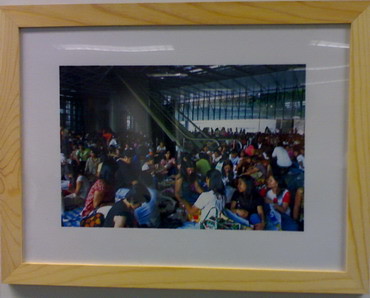
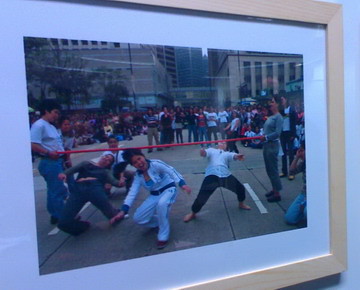
下面两张照片是一个与会者晒的,主题是菲佣的假日,她们每周只有一天可以休息,而且往往还被拖延,周日的时候可以看见她们聚集在公元、立交桥等公共地方,打扑克、庆祝生日、礼拜等等。晒的人说,很多菲佣是穆斯林,因为在主人家不得不动猪肉,所以必须通过礼拜忏悔云云。此外,还有人晒了一下DV的情况——不是Digital Video,是Domestic Violence。说在新加坡和香港,女的只要去警察局报案,警察第一件事就是把她们送到医院去检验伤情,我立刻投桃报以崇拜的眼神。