Category: <span>专业日志</span>

Berkman Center Announces 2010-2011 Fellows

https://cyber.law.harvard.edu/newsroom/2010_2011_fellows

Cambridge, MA – The Berkman Center for Internet & Society at Harvard University today announced its new class of fellows for the 2010-2011 academic year, continuing a tradition of providing a home to many of the brightest and most creative minds in law, technology, and social science, as well as leading entrepreneurs and activists. Joining the Berkman Center is an opportunity for fellows to further pursue their current work, to incubate new ideas, and to apply their expertise more directly to the Center’s interdisciplinary research agenda.

“We are thrilled to have such a gifted and engaged group of fellows from so many different disciplinary, professional, and personal backgrounds on board this year,” said Berkman Center Executive Director Urs Gasser. “Fellows play an essential part in our pursuit of rigorous research and scholarship with impact. Looking at the class of 2010-11, there is no doubt that the diverse and outstanding group of fellows will continue to fuel the Berkman Center’s activities and broaden its perspectives in the months and years to come.”

New 2010-2011 Berkman fellows:

Radio Berkman: A Non-Unifed Theory of the Internet

Radio Berkman is a series of online radio program produced by Berkman Center at Harvard University. The latest session is an interview to me by Danial Jones on the topic of Cyber-pluralism. Please click the title of this post to read more and listen it.

Caution: the radio program may be played automatically if you are not using IE, please prepare an earphone when you are staying at somewhere requiring silence.

关于“互联网是”什么的搜索实验

Doc Searls 在他的博客上记录了自己在Google上和Twitter上对 "The Internet is” 的搜索结果(带引号,即只显示包含这个完整的短语的页面),下面是他整理的Google上的结果(Twitter的请到他博客上去看):

“The Internet is” 互联网是:

1. a Series of Tubes 一系列管道

2. terrible 可怕的

3. really big 实在非常大

4. for porn 色..情.信息

5. shit 一坨屎

6. good 好东西

7. wrong 一个错误

8. killing storytelling 扼杀谎话

更多请入内阅读


2001年著作权法中表演权概念的毛病

先看《伯尔尼公约》第十一条


Article 11 (Certain Rights in Dramatic and Musical Works: 1. Right of public performance and of communication to the public of a performance; 2. In respect of translations
(1) Authors of dramatic, dramatico-musical and musical works shall enjoy the exclusive right of authorizing: 
    (i) the public performance of their works, including such public performance by any means or process; 
   (ii) any communication to the public of the performance of their works.
第十一条1. 戏剧作品、音乐戏剧作品和音乐作品的作者享有下列专有权利,以授权:
(1) 公开表演其作品,包括用各种手段和方式公开表演
(2) 用各种手段公开播送其作品的表演


在伯尔尼公约,“公开表演”意思是:在公开场合(或者至少是在一个向公众开放的场合)对作品的表演。[Guide to the copyright and related rights treaties administered by WIPO]


分享一点粗浅的法学论文写作经验

  今天和同学在QQ上聊起写论文,胡乱说了几句方法的东西,事后一读觉得还挺有意思,贴在这里分享一下,自己也记录一下。

  法学研究毕竟与社会学不同。首先还是对法律逻辑体系的整理、批评和回顾。我觉得首要的研究是现有立法。先把现有立法、现有司法判决整理出来,我觉得这是第一步。第一步看了一些立法和判决后,会发现立法和司法中的问题,比如模糊之处,或者矛盾之处。再针对问题去找相关的资料,这样就很快缩小范围了。

  至于外国的相关制度,则不能着急。要等真的整理出了问题之后,再去找外国的法律。否则,以方向(或“主题”)为关键词去找外国的东西,就很容易失败。很多研究者都想拿自己的题目直接翻译后去搜索外国资料,然后会发现外国没有相对应的立法。我想主要的问题是没有注意到比较法的局限。比较法作为一种方法,还是以功能主义为主。功能等同的制度,在描述上,在学科归属上,各国会非常不同。所以不见得有用。

  只有发现问题后,才有可能带着问题去找资料,包括阅读外国的立法(或教科书,教科书往往很有用),通篇阅读(或者至少看目录),而不是单独找对应条款(因为常常找不到对应的),然后才能发现其中可能可以解决相关问题的条款。

中国著作权法于2010年2月26日修正

新华社27日消息

全国人民代表大会常务委员会关于修改《中华人民共和国著作权法》的决定
(2010年2月26日第十一届全国人民代表大会常务委员会第十三次会议通过)

第十一届全国人民代表大会常务委员会第十三次会议决定对《中华人民共和国著作权法》作如下修改:

一、将第四条修改为:“著作权人行使著作权,不得违反宪法和法律,不得损害公共利益。国家对作品的出版、传播依法进行监督管理。”

二、增加一条,作为第二十六条:“以著作权出质的,由出质人和质权人向国务院著作权行政管理部门办理出质登记。”

本决定自2010年4月1日起施行。

《中华人民共和国著作权法》根据本决定作修改并对条款顺序作调整后,重新公布。


  这个修正案修正了什么呢?时间有限,这里暂不详细分析。只简单记录下。先看修正前的第四条:


  第四条 依法禁止出版、传播的作品,不受本法保护。


  这一条款在2007年开始、2009年裁决的美国诉中国WTO知识产权纠纷案DS362中被WTO纠纷解决机构判定为违反中国作为WTO成员国的义务(相关详细介绍的帖子点此)。因此,中国需要修改这个条款。现在中国修改了,算是执行了WTO的裁决。

  至于新增加的第二十六条,则实际上已经规定在担保法里。而且早在1996年,国家版权局就已经做出了具体的规定(点此看《著作权质押合同登记办法》)。换句话说,实际上这不是新的规定。


  最后,说个有关立法技术的问题——为什么中国法律修改新增条款就不会换一种方法呢?这样横插一条就直接改变此后的所有条款的条文号,时间一长,未来许多人再看修正前的司法判决,就会找不到判决中所指的条款。为什么不能简单写成“第二十五条之二”呢?


10 Websites Make You Understanding the Cinternet

As Google’s abrupt leaving from China, the splitting of the Internet seems faster and faster. I think the following ten websites can lead observers understanding the Chinese Internet. All of them survived China’s censorship, and are developing rapidly. Compare to the websites that has been blocked (that I listed on Wednesday here), they are the real main stream for the over 400 million Chinese netizens.

First of all, They are all in Chinese, and seldom provide multi-language service. This might be the obstacle for the English speaking researchers, but it can also be regarded as the first typical character of Chinese website – not because of the censorship, but because of the population. The formation of a separate "Sub-internet" needs a big enough population.
There are many great blogs and websites reporting Chinese Internet (Cinternet hereinafter), such as Danwei, Shanghainist, Gokunming, etc. But if one wants to understand the trend of Cinternet, the following websites, as well as a little Chinese, plus some translation tools are necessary.

In my view, when we are talking about the Cinternet, the targets should be the "plain" websites, not those pioneer ones. Each of the following websites is crowded with millions of users, and all of them survived the censorship and/or self-censorship. The core/column of the Cinternet should be based on them but not those obviously unsurvivable ones. For example, a research to Chinese bloggers should focus on not only the independent or even blocked bloggers, but also the mainstream in those highly controlled blog services.

1. http://www.QQ.com (Alexa China 2; world 11; on Jan 15th 2010, the same below)
The top website in China according to Alexa in Jan. 2010. And it has almost all kinds of web application including blog (blog.qq.com), game (qqgame.qq.com), news, sns (qzone.qq.com), search engine (soso.com), micro-blog, C2C (www.paipai.com), and most importantly, Instant Message (im.QQ.com). Almost each Chinese netizen has a QQ number. the number of the accounts has exceeded 900 million in 2007, and the active users were over 400 millions in 2008. Then they only publish the number of  concurrent online users – this number exceeds 80 millions on Oct. 10th 2009, and exceeded 90 millions two months later.

Angry Google and the Splitting Internet

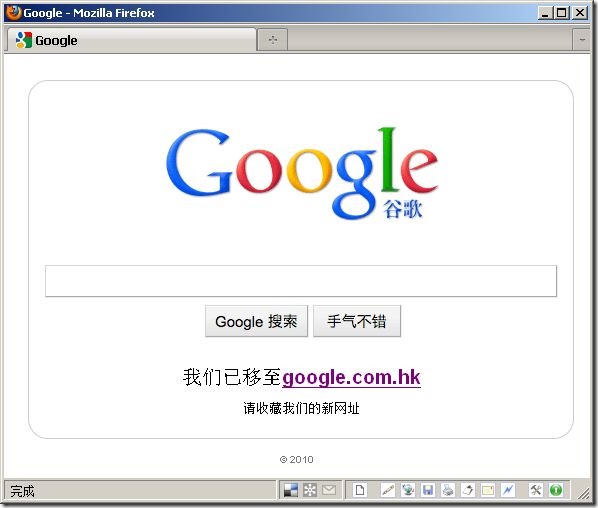
From Google.cn, to G.cn, to Chinese name Guge, this Internet giant tried to fit its size and pose to the bottle of censorship, while it still can not afford the conflict of the values. In 2009, it has been blocked from access, humiliated for spreading porn and accused for copyright infringement. Finally, Google expressed its value in a direct, as well as not Chinese, way.


When I heard this news yesterday, the first thing what I did was to save the page of Google.cn. It may be dead soon.

Following a tweet, people gathered and present flowers to Google Beijing office (click here for more, and the latest report is: along with flowers and candles, a book 1984 by George orwell joined the gifts for sacrifice):


Twitter  is blocked in China, but yesterday the Chinese twitters made tag #GoogleCN climbed to the top ten of twitter’s keywords. It is a bit touching, and a bit hopeful – A profitable, foreign company get this means filtering and block still not make Chinese people (at least some of them) losing their eyesight and judgment to what is good and what is bad. 

终于等到了见证历史的那一天

截图02 从小就希望能成为见证历史的人,可惜运气不好,见证的都是进不了历史书的小事情,好容易弄到两张奥运的票还没法去北京送了人。所以决心专心做网络法研究,网上事是连通的,在家里就能见证,省钱、暖和。

看下面的新闻:

境外注册域名将不得用于中国业务 国际域名在列

为规范域名注册管理及服务秩序,有效开展打击手机淫秽色情专项行动,保护广大互联网用户的合法权益,工信部于2009年12月16日组织全国域名注册服务及管理机构在北京召开旨在规范全国域名注册暨贯彻落实依法打击手机淫+秽.色_情专项行动会议。

把免责条款变成归责条款:法律移植的怪现象——再谈侵权责任法草案中的网络服务商责任条款

  刘家瑞博士在其论文“我国网络服务商的避风港规则”中,已经描述了这样的一个现象:在国外,有关版权的“避风港规则”是免责条款,这种规则移植到国内后,就变成归责条款了。现在《侵权责任法》草案第三十六条中所提到的”网络服务商的责任”,又出现了这种类似的异化。我觉得法律移植这种事情,第一次出现异化可能可以归因于移植的人的疏忽或者其它偶然因素,但第二次出现相同的异化就要警惕了——是不是土壤有问题?

  首先解释一下啥是免责条款,啥是归责条款?

  简单点说,当一条规定是免责条款的时候,其作用就仅限于给被告提供一条可以合法开脱自己责任的理由。假如案情不符合这条规定的情况,其法律后果仅仅是被告不能用这条理由抗辩,但并不意味着被告就一定要承担侵权责任,被告可能还有其它理由。

  而当一条规定是归责条款的时候,则其作用就是要求法院依据这个条款规定的条件,去判断被告是否要承担责任。一旦满足这个条款所描述的情况,则被告就要承担责任。

不是强加注意义务,而是错设连带责任:评侵权责任法草案网络条款

  在《中华人民共和国侵权责任法(草案)》征求意见稿中,第三十六条是这样的:


第三十六条 网络服务提供者知道网络用户利用其网络服务侵害他人民事权益,未采取必要措施的,与该网络用户承担连带责任
网络用户利用网络服务实施侵权行为的,被侵权人有权通知网络服务提供者采取删除、屏蔽、断开链接等必要措施。网络服务提供者接到通知后未及时采取必要措施的,对损害的扩大部分与该网络用户承担连带责任。

  对这一条,一些学者开会提出了质疑。并提出了修改意见(原文点此),会议上大家的基调基本是反对该条,但反对得不够彻底。有些地方还有误解,比如,会后向立法者提交的建议书中说:

……第三十六条要求网络服务提供者“知道”第三方使用其服务上传或存储的内容,等于无端加增了网络服务提供者的义务……